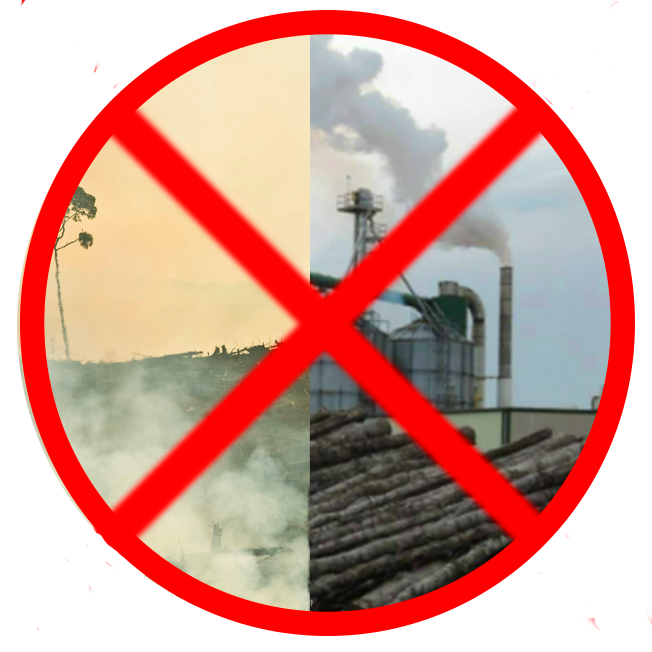
Destructive biofuels and wood-based biomass out of next Renewable Energy Directive say 120 organisations to EU renewables consultation
February 10, 2016
Campaigners say: False solutions to climate change do not cut emissions but damage land and livelihoods in other countries
10th February 2016 – 120 civil society organisations and networks from across the globe have published a declaration today, calling for bioenergy to be excluded from the next EU Renewable Energy Directive (RED) [1]. The declaration is being submitted to a consultation into the renewal of the directive for 2020 onwards [2].
The EU intends industrial bioenergy, i.e. biofuels and wood-based biomass, to continue playing a major part in its new renewable energy strategy. Campaigners say this will exacerbate the grave impacts already being experienced because of current support for biofuels and wood-based bioenergy in the EU. Bioenergy already accounts for around two-thirds of energy classed as renewable in the EU.
Industrial bioenergy is not renewable
The central premise of the declaration is that bioenergy should not be classed and supported as renewable energy, contrary to current EU definitions. Campaigners point to growing evidence that industrial bioenergy is not renewable because it is not replenished as quickly as it is consumed. Worse still, carbon emissions from burning biomass for energy are often greater than the emissions from the fossil fuels they are supposed to replace.
Devastating impacts of large-scale bioenergy on people, forests, climate
The declaration sets out a powerful case for the exclusion of all forms of bioenergy from the new legislation, citing numerous examples of the harm that current EU bioenergy policy has done to people, forests and the climate.
“The devastating direct and indirect impacts of large-scale bioenergy must be fully recognised and reflected in the new RED” said Teresa Perez from the World Rainforest Movement [3]. “We’ve joined with 120 other groups to send a strong signal to the EU that it must change its mind on bioenergy or risk doing far more harm than good. It’s clear that support for bioenergy in the EU is directly impacting forests internationally and the people that depend on them, promoting industrial tree plantations, as well as incentivising even greater carbon emissions.”
Peer-reviewed studies and on-the-ground investigations show how industrial-scale bioenergy is not renewable [4]. Instead, it results in significant carbon emissions and fuels the destruction of biodiverse forests from North America to South-east Asia and Europe itself, which are vital carbon sinks. Biofuels in particular have become a major driver for land-grabbing in the global South and are, in many cases, linked to serious violations of land and labour rights.
Standards and sustainability criteria will not address the problem
Signatories of the declaration dismiss policy-makers claim that sustainability standards for bioenergy can mitigate potential negative impacts. Helena Paul from Econexus in the UK [5] states: “Standards and certification cannot address the fundamental issues of the scale of demand, and the scale of exploitation. Instead, certification helps to legitimise the destructive and exploitative practices by providing false reassurances. No regulatory body exists in the EU or elsewhere which has the capacity to verify, audit and sanction bioenergy supply chains.”
19th March 2026 - Biofuelwatch, Fern, Earth Thrive and the Croatian environmental NGO Green Squad have today sent an open letter to the Secretariat of the European Investment Bank (EIB), urging them to put a stop on a proposed loan to Croatian Forests. The groups warn...
Biofuelwatch has published a new briefing report titled ‘Lost in the Woods: Mendocino Redwood Company Quietly Abandons Investment Plans for Biomass to Hydrogen Project.’ The report describes a proposed biomass to hydrogen project that was to be sited, built and...
Zementhersteller plant neue Anlage für die Produktion schwarzer Holzpellets in Rüdersdorf bei Berlin / Umweltorganisationen warnen vor Schäden für Wälder und Klima Gemeinsame Pressemitteilung von ROBIN WOOD, Biofuelwatch und NABU 24. Februar 2026 - Der...